
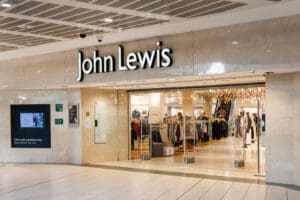
The John Lewis Partnership has reinstated its staff bonus for the first time in four years, awarding employees a 2 per cent payout after a modest improvement in sales and underlying profits.
The decision marks a symbolic milestone for the employee-owned retailer, which has spent the past several years navigating pandemic disruption, rising costs and intense competition across the UK retail sector.
The partnership, which operates 36 John Lewis department stores and around 320 Waitrose supermarkets, reported profit before tax and exceptional items of £134 million for the year to the end of January. That represents a modest improvement from £126 million the previous year.
However, statutory results told a different story. The group recorded a statutory loss before tax of £21 million, compared with a £97 million profit a year earlier, largely due to one-off costs including the write-down of legacy technology systems.
Despite the accounting loss, the improvement in underlying performance was enough for management to restore the long-awaited bonus for its 70,000 employee-owners, known internally as partners.
Overall group sales increased 5 per cent year-on-year to £13.4 billion, reflecting stronger trading across both of the partnership’s main retail brands.
The grocery arm Waitrose delivered the strongest performance, with sales rising 7 per cent to £8.5 billion, supported by a 3 per cent increase in volumes as the supermarket chain attracted more shoppers.
Meanwhile the John Lewis department store business reported sales growth of 3 per cent to £4.9 billion, as the retailer sought to stabilise its position in a competitive market increasingly shaped by online platforms, fast-fashion brands and discount rivals.
Despite the improving figures, the company warned that several cost pressures continued to weigh on its overall profitability.
The partnership said profits were “held back” by £53 million of headwinds, including the recent rise in employer national insurance contributions, the introduction of the extended producer responsibility levy, and cautious consumer spending during the Christmas period.
For many employees, the reinstatement of the annual bonus carries symbolic importance after a prolonged period without payouts.
The John Lewis Partnership traditionally shares a proportion of its profits with staff through an annual bonus that has historically been one of the retailer’s defining features.
However, bonuses were suspended during the pandemic after lockdown restrictions forced store closures and significantly reduced revenue.
The freeze began in 2020, marking the first suspension of the bonus since 1953.
Although the payment briefly returned in 2022 at 3 per cent, it was subsequently cancelled again as the company battled losses and undertook a major restructuring programme.
In previous decades the bonus had been far more generous. During the late 1980s employees received payouts worth as much as 24 per cent of annual salary, reflecting the retailer’s stronger profitability at the time.
The newly announced 2 per cent bonus therefore represents a cautious step toward restoring one of the partnership’s most distinctive traditions.
The decision comes under the leadership of Jason Tarry, the former Tesco UK boss who became chairman of the John Lewis Partnership in September 2024.
Tarry has been tasked with reviving the fortunes of the historic retailer following years of declining profits, store closures and strategic missteps.
Under his leadership the company has begun refocusing on its core retail operations, reversing earlier efforts to diversify into areas such as property development.
One notable change was the decision to abandon the partnership’s controversial build-to-rent housing strategy, which had planned to construct rental homes on land owned by Waitrose supermarkets.
The retailer said shifting economic conditions, including higher interest rates and construction costs, meant the project no longer met its investment criteria.
Instead, the partnership is doubling down on retail, committing to £800 million of investment across its stores as part of a long-term plan to improve customer experience, modernise shops and strengthen its digital capabilities.
Tarry said the early signs suggested the company’s new “retail-first strategy” was starting to deliver improvements.
“Our multi-year plan to invest in customers and our brands for the long term is working,” he said.
“We have grown customer numbers and achieved record satisfaction. We remain on track to make further progress this year.”
The partnership said its improved financial position, including stronger liquidity and relatively low levels of external borrowing, meant it could continue investing in its transformation plans despite the uncertain economic outlook.
Management believes the strategy will allow the business to win back shoppers, strengthen brand loyalty and unlock growth opportunities across both Waitrose and John Lewis.
Despite the restoration of the bonus, executives struck a cautious tone about the wider economic environment.
Tarry warned that the retail sector remained challenged by weak consumer confidence, rising operating costs and intense competition, describing the market conditions as “subdued”.
The partnership said it remained “well positioned to navigate the challenging macroeconomic environment”, but acknowledged that further work was required to restore the company to sustained profitability.
“We are confident in making further steps forward in the year ahead as we progress our multi-year transformation,” Tarry said.
For the wider retail industry, the return of the John Lewis bonus carries symbolic significance.
The partnership’s employee-owned model has long been held up as an example of profit-sharing and staff engagement within British retail, with bonuses traditionally seen as a reward for collective performance.
After several difficult years marked by restructuring, store closures and rising competition from online rivals, the reinstatement of the bonus is being viewed internally as a sign that the retailer’s turnaround efforts may finally be gaining traction.
While the payout remains modest compared with historic levels, the return of the bonus suggests the partnership is beginning to regain stability after one of the most challenging periods in its 162-year history.
Read more:
John Lewis reinstates staff bonus after four-year hiatus